The workshop in Eilat was timed perfectly with the day’s natural theater. As the sun began to sink over the Red Sea, the light softened into warm gold and the water shimmered in gentle ripples. A tall ship drifted across the horizon, its silhouette sharp against the fading sky, while the desert mountains behind Eilat dissolved into layers of muted pink and purple. The distant cranes of the port stood faint but present, reminding everyone that travel is more than just escape—it’s also logistics, commerce, and infrastructure. Against this backdrop, the workshop felt less like a seminar room and more like a live demonstration of what travel marketing is all about: capturing the harmony between dreamlike moments and grounded realities.
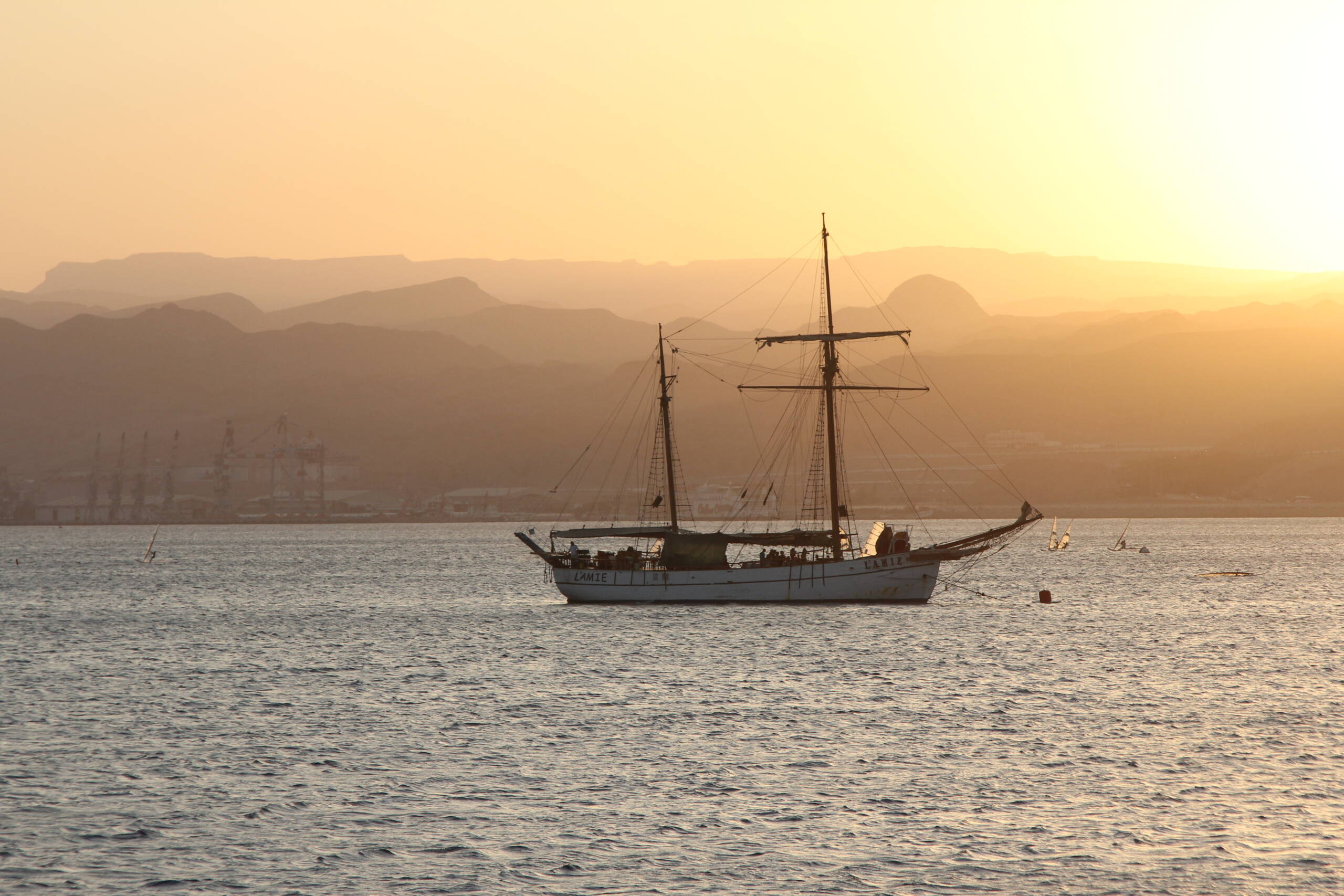
Gathered by the waterfront, participants reflected on how one image—like the ship gliding into the sunset—can hold the power to move people more than any brochure statistics or ad copy. The workshop leaders used the scene to frame key questions: how do you make someone feel like they’re part of a picture? How do you balance authenticity with allure? The conversation turned naturally to mood, desire, and memory, all amplified by the sensory experience of the moment. Instead of abstract theory, the lesson was lived—the salty breeze, the sound of water lapping against the hull, the golden light painting the sea.
- Mission District Murals, San Francisco
- Framing the City: Vitoria-Gasteiz Through Stone
- A Celebration in Paint – Museo de Bellas Artes de Álava
- Museo de Bellas Artes de Álava, Vitoria-Gasteiz
- Vitoria-Gasteiz, Spain’s Green Capital
- Belem Tower, Lisbon – Finding Beauty in Imperfection
- Marquês de Pombal Square, Lisbon
- Urban Mobility in All Senses
- Walking the Walls of Pena Palace, Sintra
- Vienna, Bratislava and Prague: A Golden Triangle of Central Europe
The imperfections in the view, such as the industrial cranes in the distance, sparked some of the most valuable discussions. Far from detracting, these elements highlighted authenticity, showing that Eilat is not only about leisure and tourism but also about trade, history, and connection. Travelers don’t always want a polished fantasy—they want real places with layers, where relaxation exists alongside the hum of daily life. That duality became the core takeaway: travel marketing succeeds when it presents destinations as living, breathing stories rather than sterile backdrops.
By the time the last light faded, the workshop in Eilat had left its mark. Notebooks were filled, yes, but more importantly, minds were tuned to a deeper rhythm of storytelling—one that blends romance, reality, and the irresistible pull of place.
Leave a Reply