There is a reason orchids have been cultivated for over three thousand years. They are not merely decorative. They are an argument.
The Phalaenopsis, which accounts for the vast majority of orchids sold in temperate markets, presents itself as a paradox: among the most mass-produced flowering plants on earth, and yet capable of producing individual blooms of structural complexity that no other genus matches at retail scale. The lateral sepals, the dorsal sepal, the two petals framing a labellum engineered by millions of years of co-evolution with specific pollinators — all of this visible on a plant purchased for twelve dollars at a supermarket checkout. That tension between ubiquity and improbability is part of what makes them compelling.
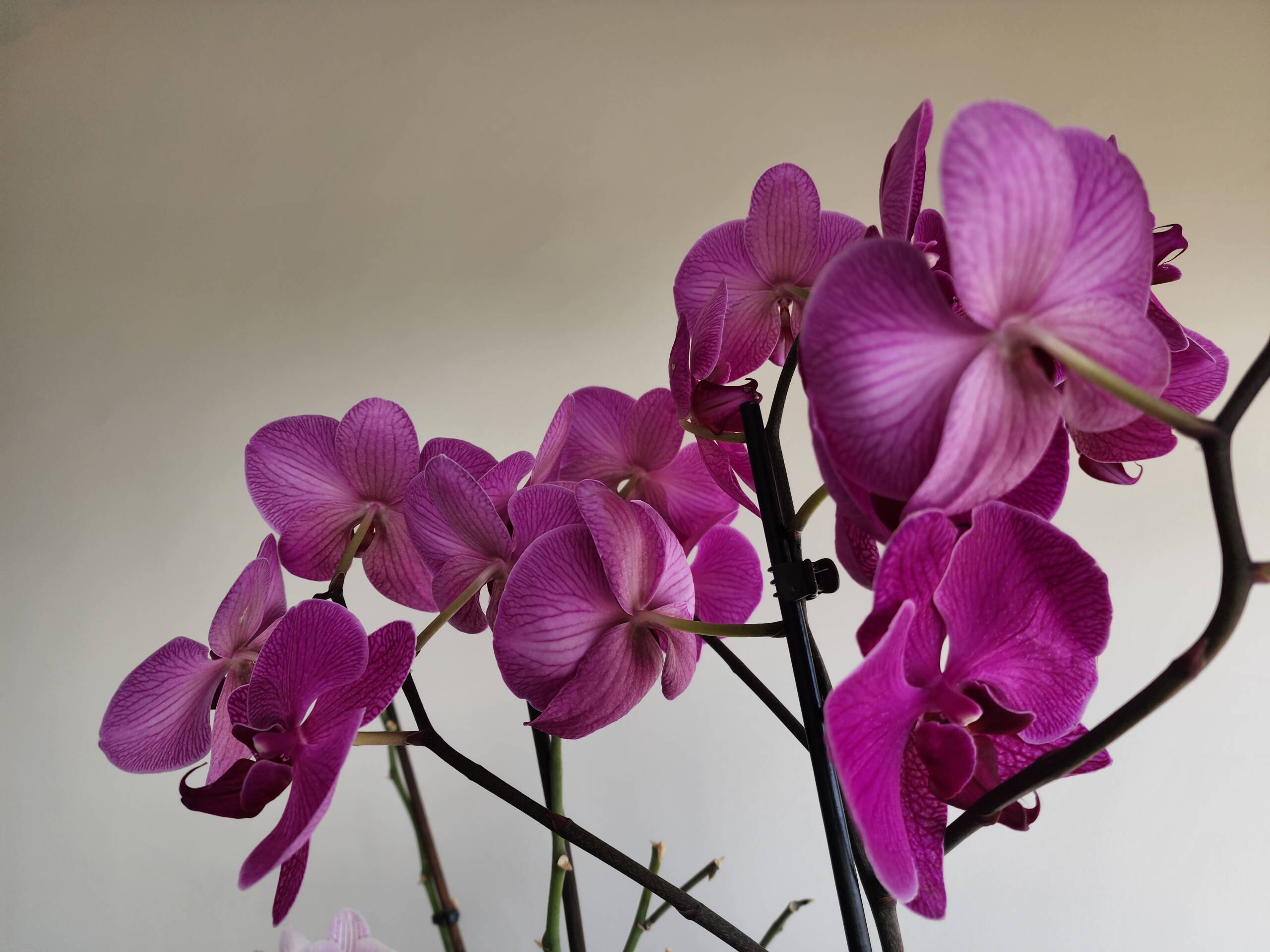
Color is where orchid breeding has made its most visible mark. The deep magenta cultivars — the ones that read almost violet in certain light — are the product of decades of hybridization work aimed at pushing pigment saturation past what the wild species could sustain. The veining on each petal, darker than the field it crosses, is not decorative in any intentional sense; it is a navigational artifact, a landing guide for insects that no longer visit these plants in any indoor setting. The orchid carries the map even when the territory no longer exists.
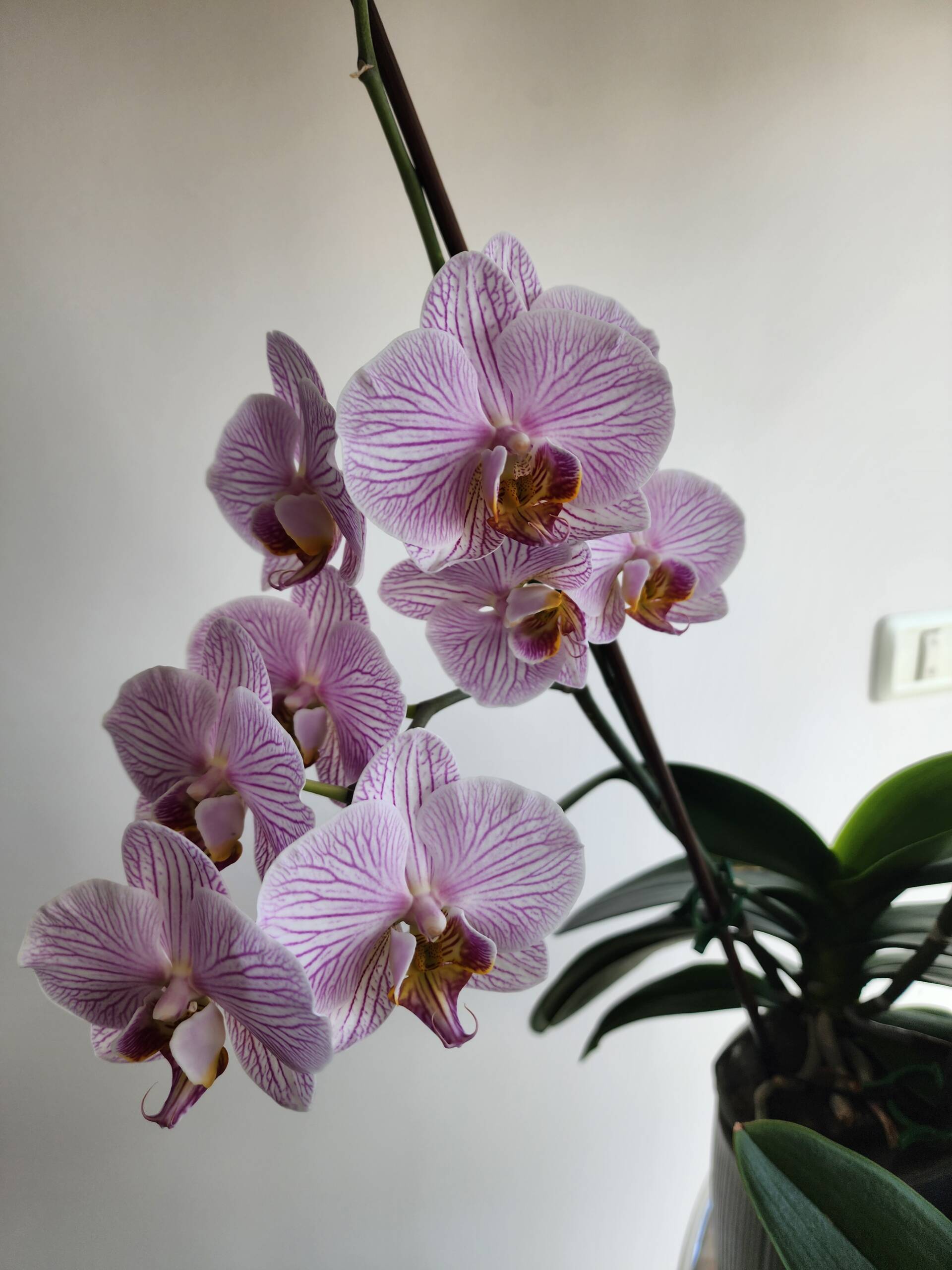
The white-ground cultivars with dense purple venation are, photographically speaking, the most demanding. The contrast between the near-white base and the network of fine lines that covers it entirely requires controlled light to render without blowout. They are also, to many collectors, the most sophisticated-looking: the complexity is in the pattern rather than the hue, and the overall impression is restrained even at full bloom density. A double-spiked specimen in this coloration, properly backlit against a neutral wall, holds its own against any cut flower arrangement at multiples of the price.
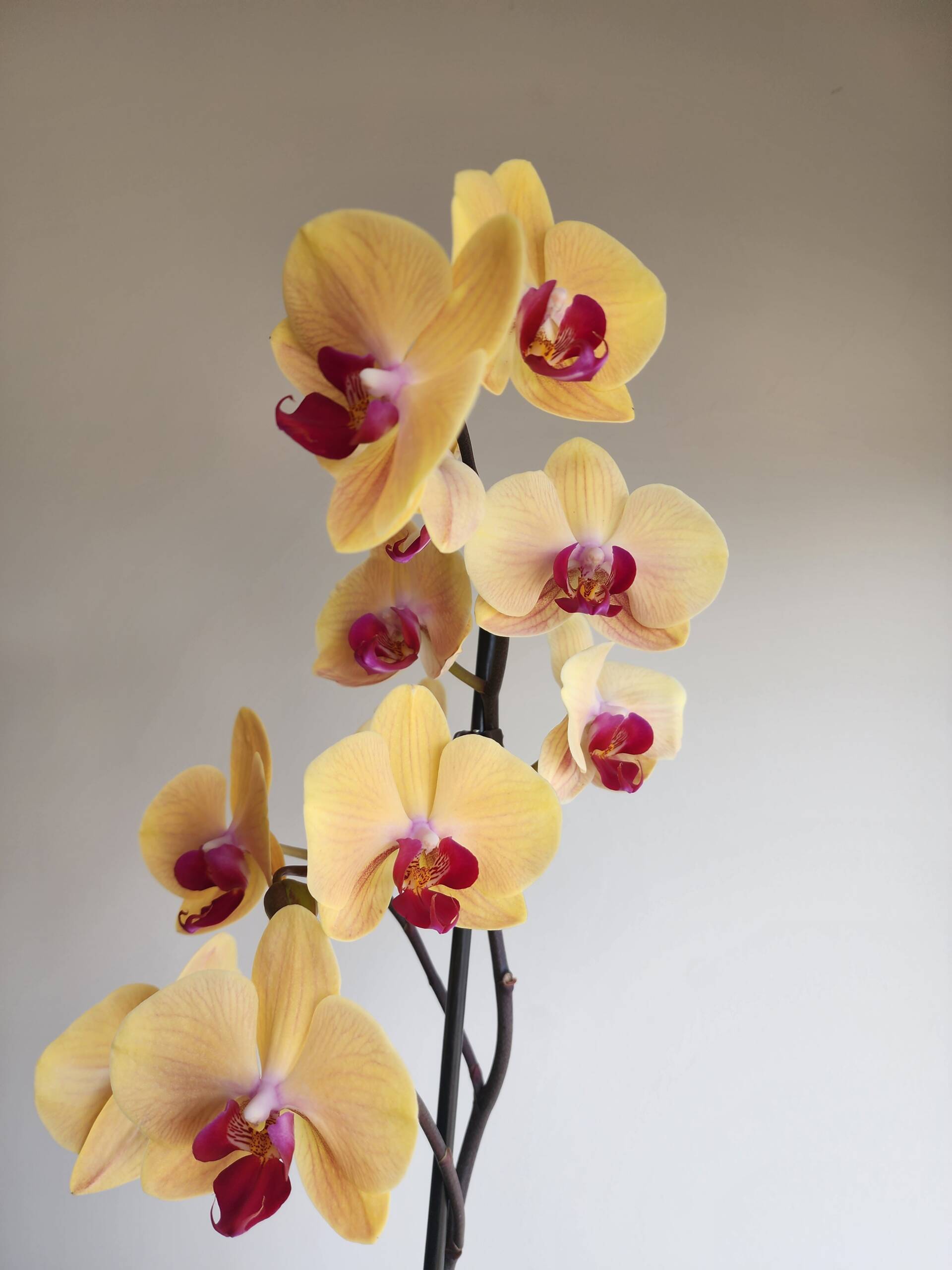
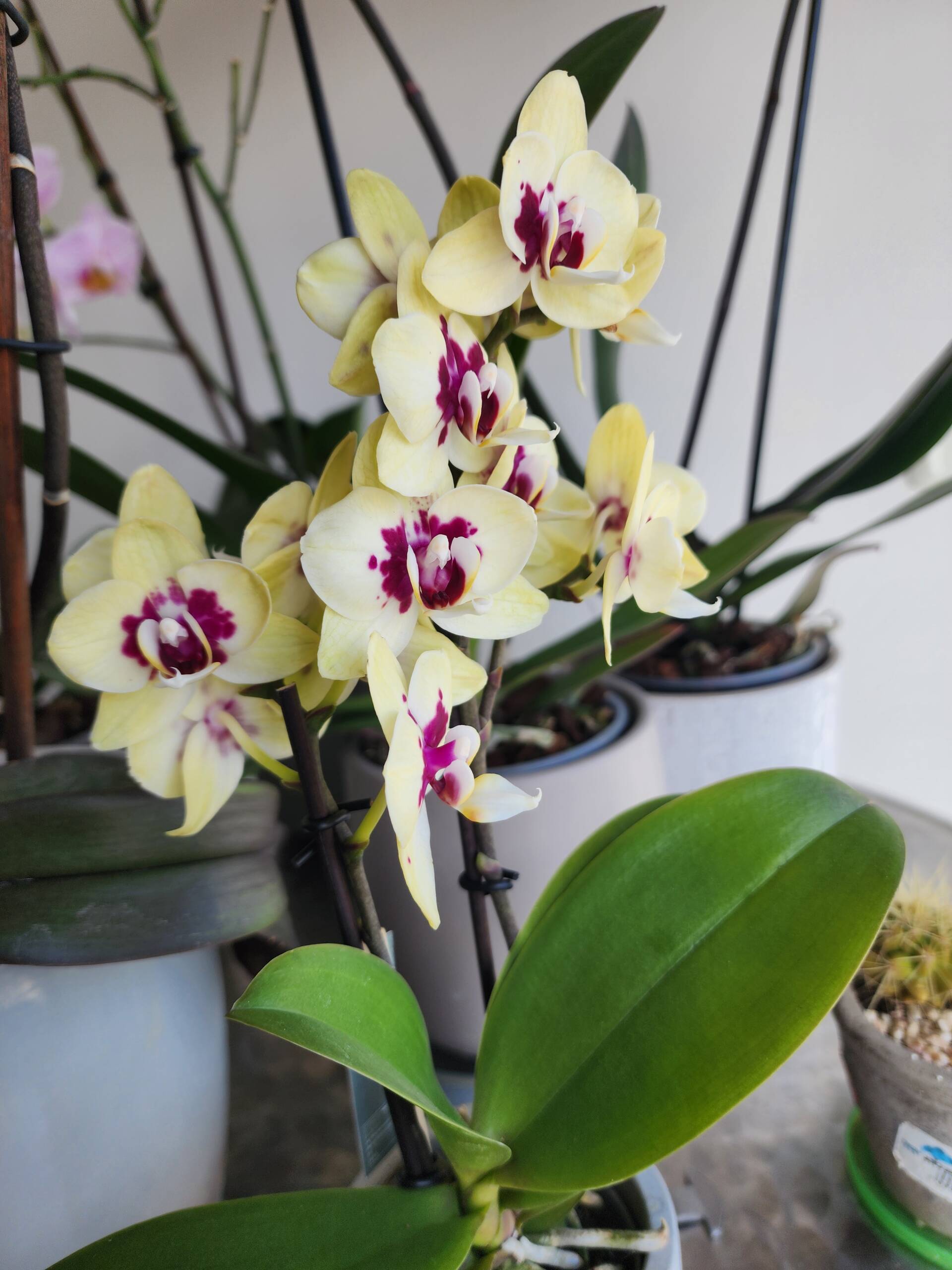
The pale yellow cultivars with heavily spotted or blotched lips represent a different aesthetic logic entirely. The lip — the labellum — is doing almost all the visual work. The tepals recede into a soft cream ground while the center blazes with dark purple, creating a color relationship closer to a Flemish still life than to anything found in a conventional garden center. These are the cultivars that attract serious collectors, partly because they are less common, partly because the color contrast rewards close inspection in a way that solid-color blooms do not.
What orchids require in exchange for this is minimal by the standards of any flowering plant: indirect light, infrequent watering, a bark medium that drains completely, and the occasional dose of dilute fertilizer. They do not ask much. They simply last longer than almost anything else in bloom — weeks to months on a single spike — and then, if the conditions are right, they come back.
Three thousand years of cultivation is not sentiment. It is a correct assessment of value.
Related:
- Phalaenopsis Reblooming Depends on Cool Days, Not the Night Temperature Drop
- Phalaenopsis Amabilis Has 65 Photographed Wild Records, and It Is Behind Every Supermarket Orchid
- Ophrys Apifera Flowers in May and June, and 41,807 Wild Records Show It
- Miltoniopsis Vexillaria's Oldest Records Are Greenhouse Plants in Pittsburgh and Chicago
- Mexico Has More Wild Vanilla Records Than Madagascar, Which Grows Most of the Crop
- Masdevallia Veitchiana Records Cluster at Machu Picchu, and One Sits at 3,105 Metres
- Dracula Chimaera Has 150 Wild Records and 13 of Them Are in Britain
- The Wild Records for Angraecum Sesquipedale Point to a Hot, Wet Lowland Plant
- Cypripedium Calceolus Has 100,916 Wild Records and Only 396 of Them Are British
- Why Orchids Steal the Show, and Why It Is Always the Same Few Orchids